In Part 2 of this series, we began looking a little more in-depth at Jesus as a man and His Earthly ministry until the time He was crucified and rose from the dead. Now let’s investigate His Resurrection and what happened after His Resurrection.
The Resurrected Jesus Remained on Earth for Some Time
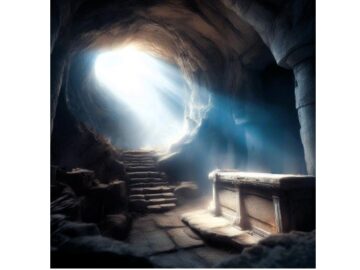
During the first 40 days after Jesus’ Resurrection Paul records that He appeared to Peter and then the 12 Apostles and more than 500 people according to 1 Corinthians 15:3-6. We also read that He showed Himself to the Apostles (Acts 13, 9-12). Chronologically we see the Bible tells us that He first appeared to Mary Magdalene at the tomb, and she was so excited she ran to tell the others (John 20:1-20) but they did not believe her (Mark 16:9-11). Jesus appeared to the other women who were told by an angel to go tell the others that Jesus had risen (Matthew 28:8-10). The others did not believe these women either (Luke 24:9-11). Other appearances are recorded in Luke 24; Mark 16; John 20 and Matthew 28.
So, we can see historically, just like today, not everyone believed that Jesus rose from the dead. The early churches were influenced by leaders that did not believe in the Resurrection and to this Paul responded. In his letter to the Corinthians (1 Corinthians 15:12-19) he reminds them how foundational belief in the Resurrection of Christ is to their Christian faith. He says that without the Resurrection the Apostles would be preaching in vain and even their faith would be in vain. He goes on to say the Apostles would have been false witnesses and that there would be no forgiveness without the Resurrection. He reminds them that those who have fallen asleep (the believers that had died already) would perish and Christians are of all men miserable.
In his article “The Empty Tomb” Theologian John Walvoord gives this great hope about the Resurrection of Christ:
The power of the Spirit of God repeatedly manifests itself in the book of Acts. It all stemmed from that resurrection power that raised Christ from the dead. Even the day of Pentecost, with its record of the descent of the Holy Spirit to indwell the church, was based upon the certainty of the Resurrection. On that glad day, three thousand Jews, having examined the empty tomb and listened to the evidence, took their stand for faith in this risen Lord.
The young church developed and grew. It worshiped in a special way on the first day of the week in recognition of the fact that this was the day on which Christ had risen. The power of the gospel spread throughout the world giving the final evidence that Christ was indeed risen from the grave and that the power of His Resurrection was the creative power of God transforming the lives of those who put their trust in the Savior who died and rose again. The epistles build upon the certainty of the Resurrection of Christ. From this evidence we can be assured that if we as Christians die, we will rise again. More important in our modern day is the assurance that if we believe that Christ died and rose again, we also can believe that He might come before we die, that we might be caught up to meet the Lord in the air. “If we believe that Jesus died and rose again, even so them also who believe in Jesus will God bring with Him” (1 Thess. 4:14). When this occurs, the Lord will descend from heaven with a shout: the dead in Christ shall rise and those believers in Christ who are alive and remain will be raptured, caught up to be with the Lord forever.
Because of the Resurrection of Christ, the culture was transformed. Over 10,000 Jews gave up social traditions and laws. Animal sacrifices ceased when Jesus came. They now believed that Jesus was the final payment for sin. They initially thought that Messiah would be a political leader and came to learn that he was a Savior and not a politician. The Church was established, baptism was instituted as people identified with Christ, and they began worshiping on Sunday rather than Saturday. And the Church outlived the Roman Empire.
The Bible shows us over and over again how Jesus’ Resurrection proves that He is equal to God the Father in so many ways:
He was fully man (Matthew 1:21)
He is Lord and has authority over all creation and the Resurrection is the supreme proof of His deity (Acts 2:32; 10:39-41; Romans 1:4
He is Christ (John 4:24-26; 11:24-27)
We can also see how The Resurrection proves His office of Prophet, Priest and King (Psalm 110:4; Hebrews 7:24-25; 2 Samuel 7). And finally, we can see how The Resurrection was essential to all of His work (Romans 4:24; 10:9), after The Resurrection:
He sent the Holy Spirit – John 14:26; 15:26; 16:7
He bestowed eternal life from Heaven – John 11:25
He became the head of the Church (a mystery) – Ephesians 1:20-23; 1 Corinthians 15:45; 1 Peter 2:4-5, 9-10
Christ became our Advocate – 1 John 2:1-2
Christ became our Intercessor – Hebrews 7::25
He gave gifts to the Church – Ephesians 4:8, 11-15; 1 Corinthians 12; Romans 12
He imparted Spiritual power – Matthew 28:8; Ephesians 1:17-19; Acts 1:8
He raises believers to a new position in Him – Ephesians 2:5-6
Christ became the Firstfruits of all believers – 1 Corinthians 15:20-23
He now works to prepare a place for us – John 14
He continues in universal Lordship over all creation – Ephesians 1:20-23
Christ became the Shepherd of the flock – Psalm 23
He offers resurrection of all men (the lost and the saved)– 1 Thessalonians 4:14; 1 Corinthians 15:51; Daniel 12:2; Matthew 22:30; Revelation 24; 20:12-14; John 5:25-30
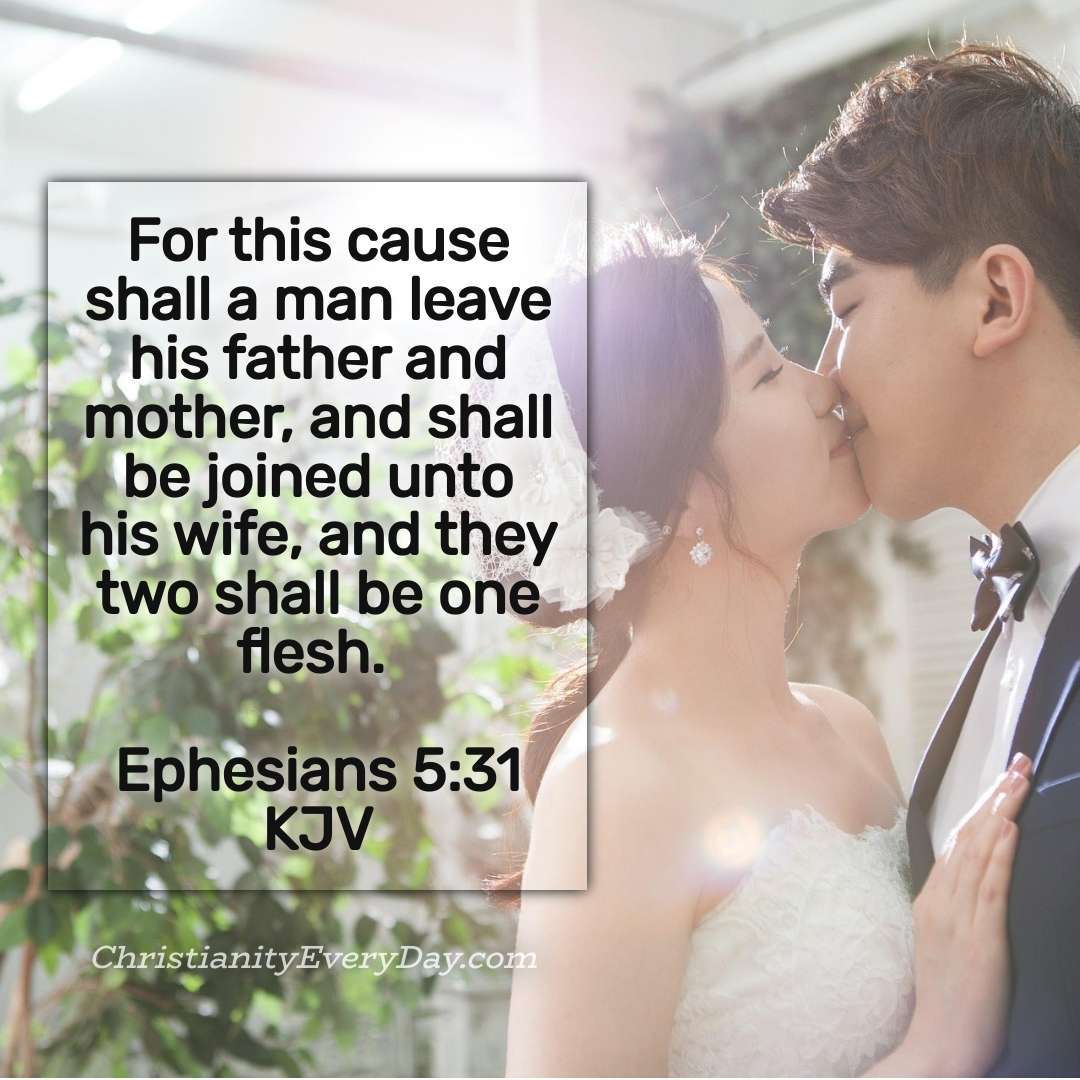
He prepares us for the Marriage of Christ and the Church (the Bridegroom and the Bride) – Ephesians 5; Revelation 19:7
He Prepares for the Judgment of all moral creatures (people and angels) John 5; 2 Corinthians 5:10; 1 Corinthians 3:12-15; Revelation 20:12-15
We are promised that Christ will reign on David’s throne, as prophesied – 2 Samuel 7:12; Psalms 2; Luke 1:32
He offers His final deliverance of the world to the Father – 1 Corinthians 15:24-28
The Trinity and How Jesus Fits in
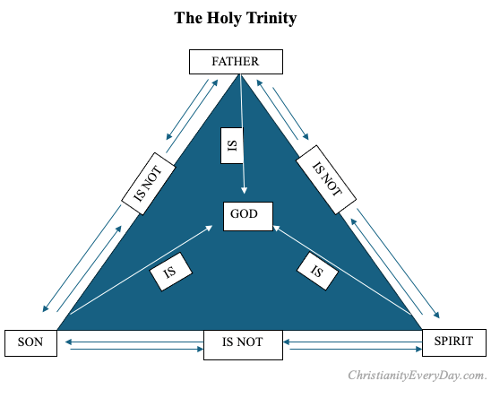
When you study the Trinity, you learn that there are 3 persons in the Godhead that are all equal to and are essentially God, though all of the persons: God The Father, Jesus the Son and the Holy Spirit each have certain roles. Also, each of the persons in the Trinity are equal to God, but not equal to each other. That is to say, The Father is not the Spirit, The Spirit is not the Son, and the Son is not the Father as persons, but they all three are God. This is hard to wrap our heads around as humans, but we have Biblical truths about it (1 John 5:7-8; John 14:16-17, 26; 1 Peter 1:2; Matthew 3:16-17; 28:19). In fact, Dr. Williams, in Part 1 of his series entitled “What Does the Bible Say About the Trinity?” suggests that this Christian doctrine is perhaps one of the most maligned and misunderstood concepts in Christianity. To learn more about the Trinity read the 3-part article series here: What Does the Bible Say About the Trinity. My picture of the Trinity is illustrated below
Additionally, in our Bible Doctrine classes we have learned the term “Hypostatic Union”. The term (adjective) “hypostatic” in English is derived from the Greek word “hypostasis” (G5287 ὑπόστασις) which is transliterated to “essence”. This is a deep doctrinal subject but to put it as simply as I can, this term is used to apply to the oneness of God and Jesus as having the same nature. In the Bible we see this Greek term used a few times, but I think the writer of Hebrews captures it best, specifically in verse 3 when he calls Jesus the express image of His [God’s] “person”:
God, who at sundry times and in divers manners spake in time past unto the fathers by the prophets, 2 Hath in these last days spoken unto us by his Son, whom he hath appointed heir of all things, by whom also he made the worlds; 3 Who being the brightness of his glory, and the express image of his person, and upholding all things by the word of his power, when he had by himself purged our sins, sat down on the right hand of the Majesty on high: 4 Being made so much better than the angels, as he hath by inheritance obtained a more excellent name than they. [emphasis mine]
Hebrews 1:1-4
Jesus often mentioned His union with the Father (John 10:30; 5:58; 14:9; 5:19-29). John and Paul also taught about this union in John 1:1-3; 20:28; Colossians 1:15-17, 19, 2:9.
Pamela Rose Williams, Founder of Christianity Every Day, is a wife, mother, and grandmother. She and her husband, Dr. Michael L. Williams have served in Christian ministry since 2001. She has Master of Ministry in Biblical Counseling and Bachelor’s in Christian Education degrees and is currently pursuing a Doctorate in Biblical Studies. Most of her time is spent as a professional editor and writer, working with many Christian authors and artists. She also uses her extensive experience in information technology providing Christ-centered teaching tools and resources for people all over the world. To learn more about Pamela visit her About page.